First, we will be looking at exercises designed to help you raise or lower your pitch to align more with your desired gender expression. These exercises may take some time for you to adjust to and will take some time and fine-tuning, so don’t be too discouraged if you feel like you can’t get it on your first try.
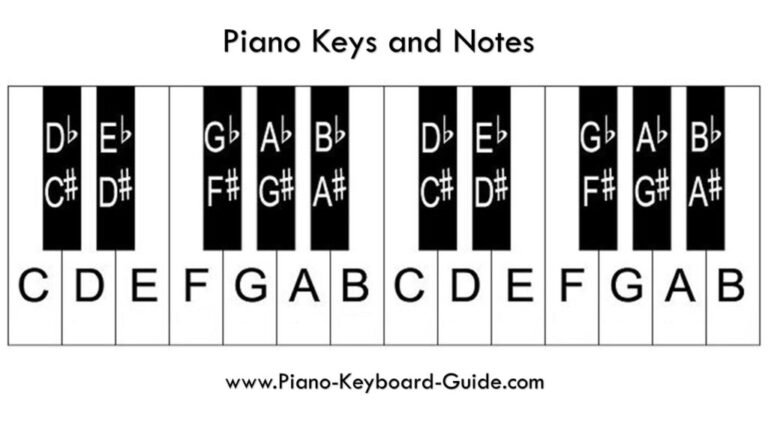
You can use Perfect Piano or another pitch-matching app to ensure you are correctly matching your pitch to the guidelines. Perfect Piano is a keyboard app that displays the names of each note on a keyboard corresponding to higher and lower pitch sounds. Each sound/note is labelled in the following order: C, D, E, F, G, A, B. Every seven notes it creates new ‘octave’ labelled numerically. As such, F#3 corresponds to the F# note in the third “octave” (set of eight notes) from the bottom of the keyboard. This will be helpful for the exercises below where you have to sustain a specific note/pitch.
Warm Ups
Sustained Vowel
Pitch Raising
- Take a comfortable breath in and make an “ee” sound on A3 for as long as comfortably possible.
- Aim for a clear, bright sound. Some people may find it helpful to imagine a cat meowing to reach this vocal quality.
- Repeat on A3, B3, C4 and D4.
- Complete the four notes twice.
Pitch Lowering
- Take a comfortable breath in and make an “ee” sound on G3 for as long as comfortably possible.
- Aim for a clear, bright sound. Some people may find it helpful to imagine a cat meowing to reach this vocal quality.
- Repeat on G3, F3, E3 and D3.
- Complete the four notes twice.
Here is a video example of what this sounds like:
Upward Glissando
- Take a comfortable breath and say “ee” while slowly gliding from your lowest comfortable pitch to your highest.
- Keep the glide slow and controlled.
- It is okay to enter a high-pitch, head voice or experience a voice ‘break’ as you move between registers. You can imagine going up a roller coaster or move your hand upwards with your voice to help yourself out and give yourself some visual support.
- Repeat once.
Here is an example of what this sounds like:
Downward Glissando
- Using “ee”, slowly glide from your highest comfortable pitch to your lowest.
- Keep the movement controlled and allow yourself to reach vocal fry, otherwise known as a ‘creaky voice.’
- Your voice may ‘break’ between registers. This is normal. Use a downward hand gesture may help guide your voice.
- Repeat once.
Here is an example of what this sounds like:
Pitch Changing
Pitch Matching
For pitch raising:
- Use Perfect Piano or another pitch-matching app.
- Hum “mmm” and try to match A3. A3 has been suggested as a useful anchor for pitch elevation training.
- Explore F#3, G#3, A3, B3, C#4, D4 and E4, staying within a comfortable range.
- If matching the above pitches using a keyboard/piano is difficult, ask someone else to demonstrate the pitch for you to imitate.
- Once comfortable humming these pitches, practise saying words on them.
For pitch lowering:
- Use Perfect Piano or another pitch-matching app.
- Hum “mmm” and try to match G3. G3 has been suggested as a useful anchor for pitch lowering training.
- Explore A#3, G#3, G3, F3, E3, D#3 and D3 , staying within a comfortable range.
- If matching the above pitches using a keyboard/piano is difficult, ask someone else to demonstrate the pitch for you to imitate.
- Once comfortable humming these pitches, practise saying words on them.
See a demonstration of pitch matching below:
Launching Pitch and Intonation
- Hum ‘mmm’ on A3 or G3 to establish your starting pitch.
- Try ‘thinking sounds’ such as “umm” or “err” at this pitch.
- Use your “thinking sounds” to segue-way into speech, e.g., “Mmmm… Monday.”
- Gradually make your starting quieter with each try, until you are simply imagining it before you speak.
See a demonstration of this technique below:
We acknowledge the Wurundjeri Woi-wurrung people as the Traditional Owners of the unceded lands on which these resources were developed.
This resource hub was funded by a 2026 University of Melbourne Student Services and Amenities Fee grant.